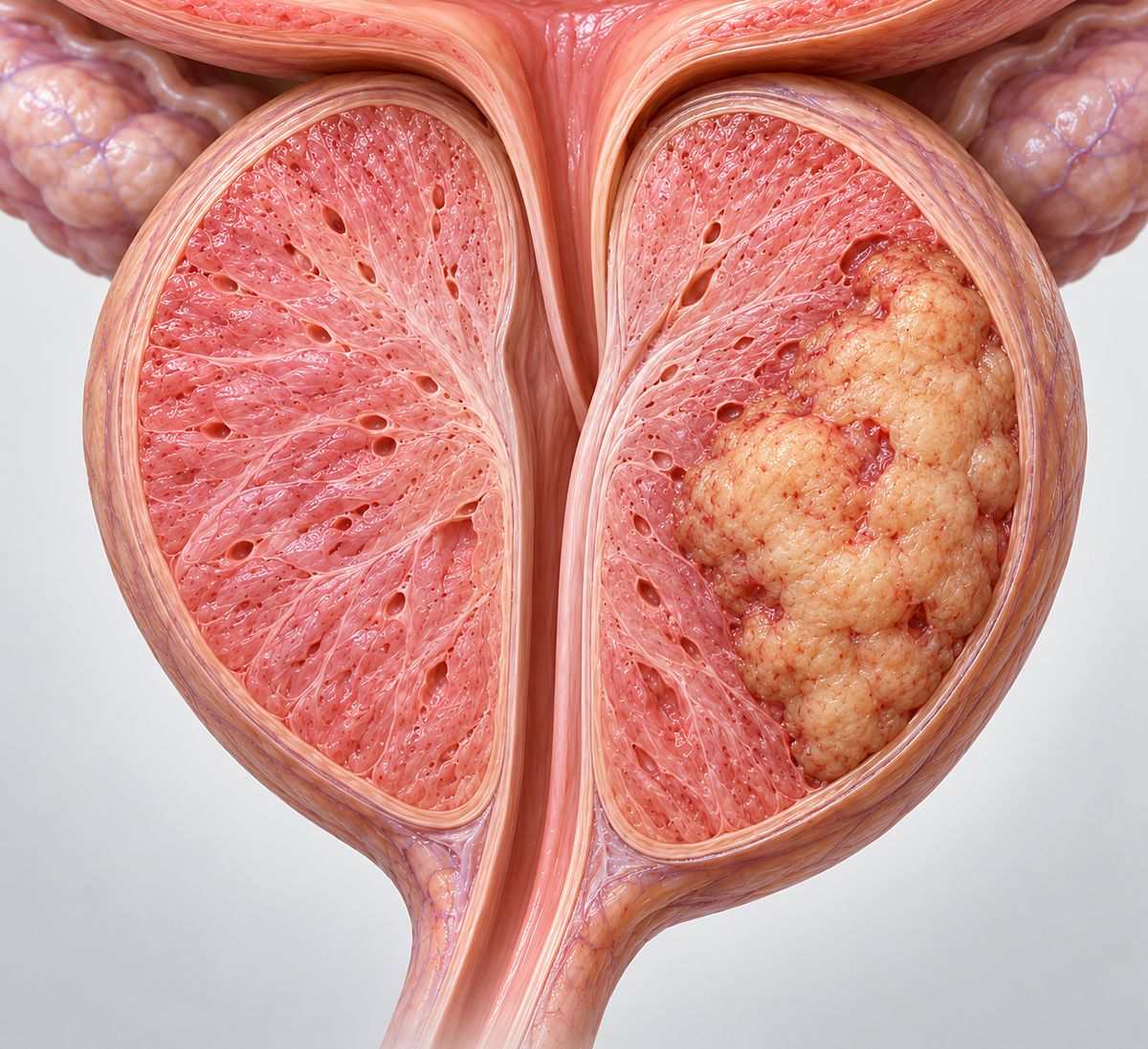
Understanding Prostate Cancer Beyond a Single Label
Prostate Cancer is often spoken of as a single condition, but in clinical practice, it represents a spectrum of diseases—ranging from slow-growing tumours that may never affect life expectancy to aggressive cancers requiring timely, definitive treatment. Recognising this distinction is essential for choosing the right treatment for the right patient at the right time.
Modern Prostate Cancer care has moved away from a “one-size-fits-all” approach. Decisions today are guided by tumour biology, stage, grade, PSA behaviour, imaging findings, and—importantly—the patient’s age, lifestyle, and priorities.
How Prostate Cancer Is Assessed Today
Accurate risk stratification is the foundation of effective Prostate Cancer management. Current evaluation typically includes:
- PSA testing with trend analysis
- Multiparametric MRI (mpMRI) to assess tumour location and extent
- Targeted prostate biopsy for precise grading
- Clinical staging to determine local or advanced disease
This structured assessment helps differentiate low-risk disease, which may be safely monitored, from clinically significant cancer that benefits from active treatment.
Treatment Options Are Stage-Specific — Not Uniform
The optimal treatment for Prostate Cancer depends on disease characteristics and patient goals:
- Active Surveillance: Appropriate for selected low-risk cancers, avoiding overtreatment while ensuring close monitoring.
- Robotic Radical Prostatectomy: A preferred option for many patients with localised or locally advanced disease, offering excellent cancer control with improved precision.
- Radiation-Based Treatments: Including external beam radiotherapy or brachytherapy, often combined with hormonal therapy in higher-risk cases.
- Multimodality Treatment: In advanced disease, surgery, radiation, and systemic therapies may be strategically combined for optimal outcomes.
Choosing among these options requires nuanced discussion—not fear-based decisions.
The Role of Robotic Surgery in Prostate Cancer
Robotic-assisted prostate surgery has transformed outcomes in appropriately selected patients. Compared with conventional approaches, Robotic Surgery allows:
- Enhanced visualisation of anatomical planes
- Greater precision during nerve-sparing procedures
- Reduced blood loss and faster recovery
- Improved chances of continence and sexual function recovery
When performed by trained Uro-Oncology specialists, Robotic Surgery plays a key role in organ-preserving cancer care without compromising oncological safety.
Functional Outcomes Matter as Much as Cancer Control
Prostate Cancer treatment success is no longer measured by survival alone. Preservation of:
- Urinary continence
- Sexual function
- Overall quality of life
is central to modern decision-making. Individualised planning helps balance cancer control with long-term well-being.
Why Specialist Uro-Oncology Care Makes a Difference
Managing Prostate Cancer requires more than technical expertise—it demands judgement, experience, and evidence-based decision-making. A Uro-Oncology-focused approach ensures:
- Accurate risk assessment
- Avoidance of unnecessary radical treatment
- Timely intervention for aggressive disease
- Access to advanced surgical techniques, including robotics
Early specialist consultation often expands treatment choices rather than limiting them.
Key Takeaway
Prostate Cancer is not one disease, and its treatment should never be one-dimensional.
With modern diagnostics and advanced surgical techniques, many men can achieve excellent cancer control while preserving quality of life—when care is personalised and evidence-driven.
If you or a family member are navigating a Prostate Cancer diagnosis, informed discussion and expert evaluation are the most important first steps.
Related: Prostate Cancer · Prostate Cancer risk groups · Gleason score explained · Recovery after robotic prostatectomy
Guidelines
This article is consistent with the EAU and NCCN Prostate Cancer guidelines.
Consultation
Dr. Anshuman Singh, Uro-Oncologist & Robotic Surgeon, sees patients in Lucknow at the Uro-Oncology OPD, Chandan Hospital (10 AM – 4 PM) and at Uro-Onco Connect, Gomti Nagar (6 – 9 PM), Monday to Friday, and by teleconsultation. PSA reports, MRI scans and biopsy reports can be shared in advance. Book a consultation.
Frequently asked questions
Does every Prostate Cancer need treatment?
No. Many low-risk cancers grow very slowly and can be safely monitored with active surveillance, avoiding the side effects of treatment while watching for any change.
How is the right treatment for Prostate Cancer chosen?
By combining the PSA and its trend, MRI findings, the biopsy grade, the stage, and the patient's age, health and priorities. Together these place the cancer in a risk group that guides treatment.
What are the treatment options for localised Prostate Cancer?
Active surveillance for selected low-risk cancers, robotic radical prostatectomy, and radiation-based treatment, sometimes combined with hormone therapy for higher-risk disease.
Treatment in Lucknow
Dr. Anshuman Singh is a Uro-Oncologist and Robotic Surgeon in Lucknow. Read about Prostate Cancer treatment in Lucknow and Robotic Surgery for Urological Cancers, or book a consultation in person or by teleconsultation.
This article is for general education and does not replace a personal medical consultation.