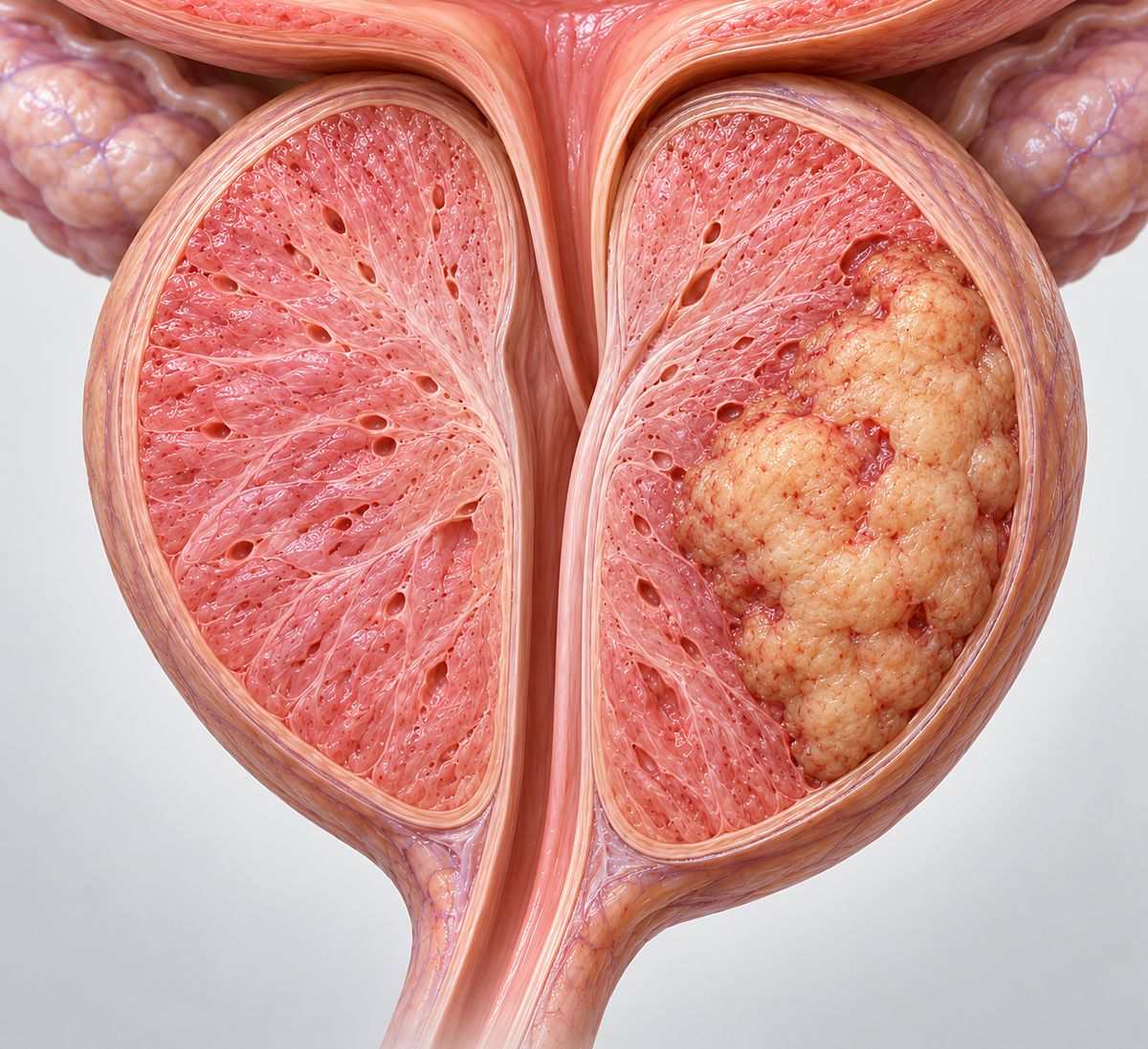
PSA (prostate-specific antigen) is a protein made by the prostate. A blood test measures how much of it is in your blood. A raised PSA is one of the most common reasons men are referred to a urologist, and understandably it causes worry.
The most important thing to know first: a raised PSA is not a diagnosis of cancer. Most men with a raised PSA do not have Prostate Cancer. The PSA tells us something in the prostate needs a closer look; the next steps tell us what.
What counts as "raised"?
There is no single cut-off that separates normal from abnormal. A value above 4 ng/mL is often used, but PSA naturally rises with age and prostate size, so the same number means different things for different men. As a rough guide, upper limits often used by age are:
| Age | Usually considered within range |
|---|---|
| 40–49 | up to about 2.5 ng/mL |
| 50–59 | up to about 3.5 ng/mL |
| 60–69 | up to about 4.5 ng/mL |
| 70–79 | up to about 6.5 ng/mL |
A rising trend over several tests can matter as much as a single value.
Common causes of a raised PSA other than cancer
- Enlarged prostate (BPH): a bigger gland makes more PSA. This is the most common reason.
- Urine or prostate infection (prostatitis): can raise PSA sharply for several weeks.
- Recent ejaculation: may raise PSA slightly for a day or two.
- Vigorous cycling or a long ride: pressure on the prostate area.
- A recent catheter, cystoscopy or urinary retention.
- Recent prostate biopsy or surgery.
A gentle rectal examination by your doctor usually makes little difference to the reading.
Should the test be repeated?
Often, yes. If your PSA is only mildly raised, or there is any chance of infection, the test is usually repeated after 6 to 8 weeks, after treating any infection. For the repeat test:
- Avoid ejaculation for 48 hours before.
- Avoid cycling and strenuous exercise for 48 hours before.
- Use the same laboratory if you can, so results are comparable.
A PSA that comes back down on repeat testing is reassuring, though your doctor may still suggest follow-up.
Related: Symptoms of Prostate Cancer
Medicines that lower PSA
Finasteride and dutasteride, often prescribed for an enlarged prostate or hair loss, roughly halve the PSA after 6 to 12 months of use. A PSA of 2.5 in a man taking these medicines is treated more like 5. Always tell your doctor if you take them.
Looking further: PSA density and free PSA
Two simple measures help decide how concerning a raised PSA is:
PSA density is the PSA divided by the prostate volume (from ultrasound or MRI). A large prostate is expected to make more PSA, so density adjusts for size. A density above about 0.15 ng/mL/cc is more suspicious and is one of the factors used to decide on a biopsy.
Free-to-total PSA ratio compares the PSA that circulates freely with the total. A lower percentage of free PSA is linked with a higher chance of cancer. It is mainly used for PSA values in the 4 to 10 range.
Related: PSA density calculator
Prostate MRI before biopsy
Today, a multiparametric MRI of the prostate is usually done before deciding on a biopsy. Areas are scored on the PI-RADS scale from 1 to 5:
| PI-RADS | What it suggests |
|---|---|
| 1–2 | Significant cancer unlikely |
| 3 | Uncertain; PSA density and other factors help decide |
| 4–5 | Significant cancer likely; a targeted biopsy is advised |
With a reassuring MRI (PI-RADS 1–2) and a low PSA density, many men can safely avoid a biopsy and continue with PSA monitoring. When a biopsy is needed, the MRI shows exactly where to sample.
Related: Prostate MRI and diagnosis
If a biopsy is needed
A prostate biopsy takes small samples of tissue for examination. The transperineal route, through the skin between the scrotum and the anus, has a lower risk of infection than the older transrectal route and allows accurate sampling of MRI targets. It is usually done as a day procedure.
The biopsy report gives a Gleason score and Grade Group, which, together with the PSA and MRI, decides whether any treatment is needed. Many men found to have low-grade cancer are managed with active surveillance rather than immediate treatment.
Related: Gleason score explained · Prostate Cancer risk groups
When to see a Uro-Oncologist
- PSA above the range for your age, or rising on repeat tests
- A PI-RADS 3, 4 or 5 lesion on MRI
- A biopsy report showing Prostate Cancer, to discuss treatment options
- A family history of Prostate Cancer, breast or ovarian cancer, or known BRCA gene changes, to plan when to start PSA testing
Consultation
Dr. Anshuman Singh, Uro-Oncologist & Robotic Surgeon, sees patients at the Uro-Oncology OPD, Chandan Hospital (10 AM – 4 PM) and at Uro-Onco Connect, Gomti Nagar (6 – 9 PM), Monday to Friday, and by teleconsultation. PSA reports and MRI scans can be shared in advance. Book a consultation.
Frequently asked questions
Does a high PSA mean I have Prostate Cancer?
No. Most men with a raised PSA do not have cancer. An enlarged prostate and infection are common causes. Further tests, usually a repeat PSA and an MRI, show whether a biopsy is needed.
What PSA level is dangerous?
There is no single number. PSA is interpreted together with age, prostate size (PSA density), the trend over time and MRI findings. A very high PSA, for example above 20, needs prompt assessment.
Can an infection raise PSA?
Yes. A urine or prostate infection can raise PSA sharply. The test is usually repeated 6 to 8 weeks after the infection has been treated.
Can I avoid a biopsy?
Often, yes. If the MRI is reassuring (PI-RADS 1–2) and the PSA density is low, many men can safely continue with PSA monitoring instead of a biopsy.
Should I stop finasteride before a PSA test?
No, but tell your doctor you take it. Finasteride and dutasteride roughly halve the PSA, so the result is adjusted when it is interpreted.
This article is for general education and does not replace a personal medical consultation.