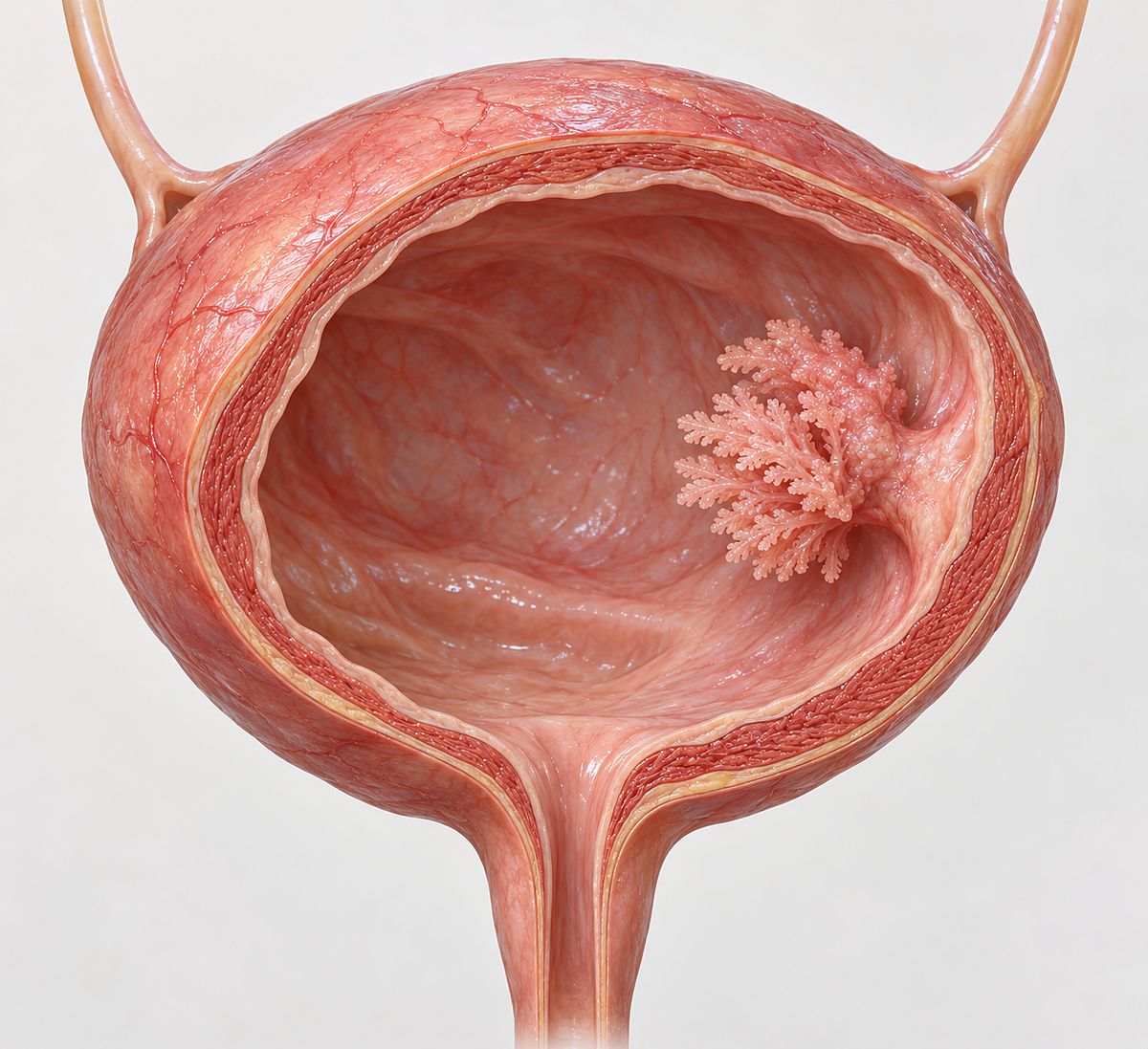
After a bladder tumour is removed by TURBT (transurethral resection of bladder tumour), the main concern for most patients is that it may come back in the bladder lining. Intravesical chemotherapy is one of the treatments used to lower that risk.
"Intravesical" means inside the bladder. The medicine is run into the bladder through a thin catheter, held there for an hour or two and then passed out with the urine. Because almost none of it is absorbed into the bloodstream, it does not cause the hair loss, vomiting or low blood counts that people usually associate with chemotherapy.
How it works
Tiny groups of cancer cells can remain in the bladder after TURBT, or float free during the operation and settle elsewhere in the lining. Chemotherapy in the bladder destroys these cells directly before they can grow into new tumours.
The drugs most often used are:
- Mitomycin C, the most widely used
- Gemcitabine, which is usually gentler on the bladder
- Epirubicin, used in some centres
The single dose straight after TURBT
For many patients, one dose of chemotherapy is given within 24 hours of TURBT, ideally within a few hours, often while still in hospital.
- It lowers the chance of the tumour returning, and works best for single, small, low-grade tumours.
- For many low-risk tumours, this single dose and regular check cystoscopies are the only treatment needed.
- It is not given if the bladder wall may have been perforated during TURBT, if there is significant bleeding, or if the resection was very deep or extensive.
A course of chemotherapy
For intermediate-risk tumours (low-grade tumours that are multiple, larger than 3 cm or have come back), a course of instillations is often advised:
- usually once a week for six weeks, starting a few weeks after TURBT,
- sometimes followed by monthly maintenance doses for up to a year.
BCG for one year is an alternative for intermediate-risk tumours. The choice depends on your tumour, previous recurrences, side effects and availability.
Related: Bladder Cancer stages · Recurrence and progression risk (EORTC)
Chemotherapy or BCG?
| Intravesical chemotherapy | BCG | |
|---|---|---|
| How it works | Kills cancer cells directly | Stimulates the immune system |
| Mainly used for | Low and intermediate-risk tumours | High-risk tumours and carcinoma in situ (CIS) |
| Effect on recurrence | Lowers the chance of recurrence | Lowers recurrence, and also the chance of progression into the muscle |
| Side effects | Usually milder | Bladder irritation and flu-like symptoms are more common |
| Live bacteria | No | Yes |
For high-risk tumours, BCG remains the first choice. Chemotherapy is used for high-risk disease mainly when BCG is unavailable or cannot be tolerated.
Related: BCG treatment for Bladder Cancer: what to expect
Gemcitabine and docetaxel
A newer approach gives gemcitabine followed by docetaxel in the same session. It is used when BCG is in short supply, for patients who cannot tolerate BCG, and in some cases when BCG has not worked. Results so far are encouraging, and it can help protect the bladder while other options are considered.
What happens at each session
Each session takes about 15 minutes in the OPD or day-care.
- Drink less for about four hours beforehand, so that urine does not dilute the medicine. You may be asked to take sodium bicarbonate tablets before mitomycin, which helps it work.
- Empty your bladder just before the treatment.
- A thin catheter is passed into the bladder, the medicine is run in, and the catheter is usually removed.
- Hold the urine for one to two hours, as advised for your drug.
- Then pass urine sitting down, and drink plenty of fluids for the rest of the day.
The treatment is postponed if you have a urine infection or visible blood in the urine.
Precautions at home
For about six hours after each treatment, urine contains chemotherapy.
- Sit down to pass urine, to avoid splashing.
- Flush the toilet twice, with the lid down.
- Wash your hands and genital skin with soap and water after passing urine. Mitomycin left on the skin can cause a rash.
- Use a condom for sex for at least 48 hours after each treatment, and avoid pregnancy during the course.
Side effects
Most people tolerate intravesical chemotherapy well.
Common and mild:
- Burning when passing urine, and needing to go more often, for a day or two
- A little blood in the urine
Less common:
- Skin rash, especially on the palms, the soles or the genital skin, mainly with mitomycin. Tell your team, because the treatment may need to be changed.
- Bladder irritation that lasts longer than a few days
Rarely, repeated treatments cause the bladder to shrink, so that it holds less urine.
Contact the hospital if you have a fever above 38 °C, severe pain, inability to pass urine, heavy bleeding with clots, or a spreading rash.
Follow-up
Intravesical chemotherapy lowers the chance of recurrence, but it does not remove it. Regular check cystoscopies are therefore essential: usually at three months, and then at intervals depending on your risk group. If a tumour comes back, it is usually small and can be treated early. Stopping smoking is one of the most effective ways to lower the chance of it returning.
Related: Blood in urine: when it is a sign of cancer · Follow-up for Bladder Cancer
Consultation
Dr. Anshuman Singh, Uro-Oncologist & Robotic Surgeon, treats Bladder Cancer with TURBT, intravesical chemotherapy, BCG and Robotic Surgery. He sees patients at the Uro-Oncology OPD, Chandan Hospital (10 AM – 4 PM) and at Uro-Onco Connect, Gomti Nagar (6 – 9 PM), Monday to Friday, and by teleconsultation. TURBT pathology reports can be shared in advance. Book a consultation.
Frequently asked questions
Does chemotherapy in the bladder cause hair loss or vomiting?
No. The medicine stays in the bladder and very little is absorbed into the blood, so the usual side effects of chemotherapy, such as hair loss, vomiting and low blood counts, do not occur.
Why is chemotherapy given into the bladder right after TURBT?
A single dose within 24 hours of TURBT destroys cancer cells left behind or released during the operation. It lowers the chance of the tumour returning, especially for single, small, low-grade tumours.
How long do I need to hold the urine after bladder chemotherapy?
Usually one to two hours, depending on the drug. Then pass urine sitting down and drink plenty of fluids for the rest of the day.
Is intravesical chemotherapy better than BCG?
They are used for different situations. Chemotherapy is mainly for low and intermediate-risk tumours. BCG is preferred for high-risk tumours because it also lowers the chance of the cancer invading the bladder muscle.
Which drug is used for chemotherapy in the bladder?
Mitomycin C is the most widely used. Gemcitabine and epirubicin are alternatives, and gemcitabine with docetaxel is used when BCG is unavailable or has not worked.
Do I still need check cystoscopies after bladder chemotherapy?
Yes. Regular cystoscopies are essential, usually starting three months after TURBT, because Bladder Cancer can come back even after treatment.
This article is for general education and does not replace a personal medical consultation.