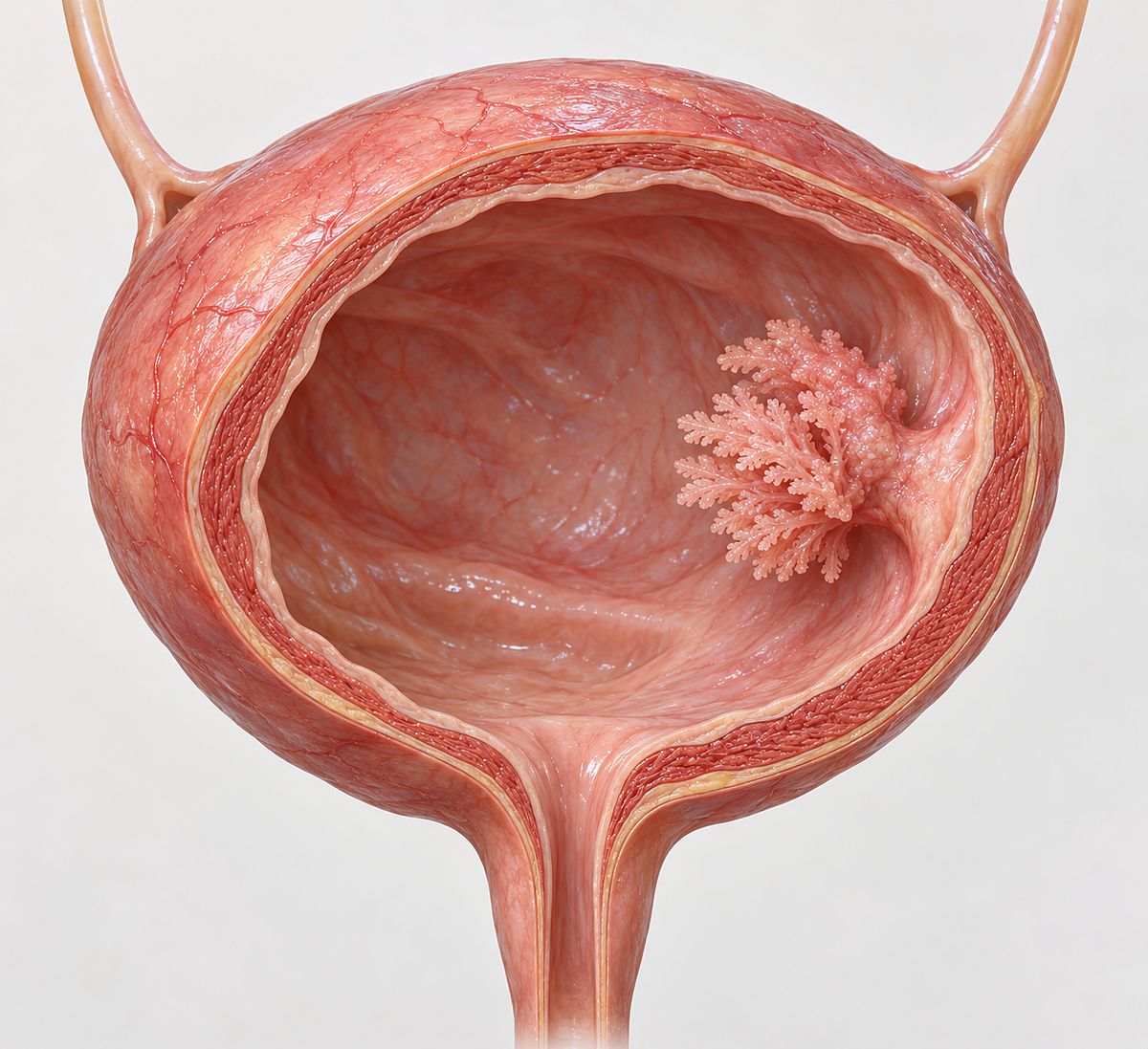
Being told that Bladder Cancer has become muscle invasive can be worrying. One of the first treatment recommendations patients commonly hear is:
“The bladder needs to be removed.”
This naturally leads to an important question:
Is radical cystectomy always necessary for muscle-invasive Bladder Cancer?
The short answer is no—not for every patient.
For many patients with localised muscle-invasive Bladder Cancer, radical cystectomy remains a major curative treatment option. However, appropriately selected patients may also be treated with a bladder-preserving approach called trimodality therapy (TMT).
The important question is therefore not simply whether the bladder can be preserved.
It is:
Can the bladder be preserved without compromising appropriate cancer treatment in this particular patient?
What Is Muscle-Invasive Bladder Cancer?
The bladder wall contains several layers. The most important distinction in Bladder Cancer is whether the tumour has reached the thick muscular layer of the bladder, called the muscularis propria or detrusor muscle.
When cancer invades this layer, it is called:
Muscle-Invasive Bladder Cancer (MIBC)
This generally corresponds to T2 disease or greater.
In simplified terms:
Ta → tumour confined to the bladder lining
T1 → tumour invades beneath the lining but not the muscle
T2 → tumour invades bladder muscle
T3 → tumour extends into tissue surrounding the bladder
T4 → tumour extends into adjacent structures
This distinction is important because once Bladder Cancer becomes muscle invasive, the risk of spread outside the bladder becomes substantially greater.
TURBT alone is therefore usually not sufficient treatment for muscle-invasive disease.
What Is the Standard Surgical Treatment for MIBC?
For patients with non-metastatic muscle-invasive Bladder Cancer who are suitable for surgery, one established curative treatment is:
Radical cystectomy + pelvic lymph-node dissection
Radical cystectomy involves removal of the urinary bladder along with appropriate adjacent structures according to the patient's anatomy, tumour characteristics and surgical plan.
Pelvic lymph nodes are removed because Bladder Cancer can spread through the lymphatic system.
After the bladder is removed, a new method of urinary drainage must be created.
Common options include:
- Ileal conduit
- Orthotopic neobladder
- Selected forms of continent urinary diversion
The choice of diversion is individualised.
Does Radical Cystectomy Mean Surgery Alone?
Not necessarily.
One of the most important concepts in modern Bladder Cancer treatment is that MIBC should be approached as more than simply a surgical disease.
Patients being considered for curative treatment should undergo appropriate staging and assessment for perioperative systemic therapy.
For many eligible patients, treatment may involve systemic therapy before surgery, followed by radical cystectomy and pelvic lymph-node dissection.
Systemic treatment options for MIBC are evolving rapidly, making multidisciplinary assessment increasingly important.
Therefore, the modern treatment pathway is better understood as:
Diagnosis → staging → multidisciplinary assessment → systemic treatment when indicated → definitive local treatment → pathology review → further treatment or surveillance as appropriate
Is Removing the Bladder Always Necessary?
No.
A properly selected patient with muscle-invasive Bladder Cancer may be considered for bladder-preserving trimodality therapy.
Importantly, bladder preservation does not mean simply removing the visible tumour by TURBT and observing the patient.
Curative bladder preservation requires a structured multimodal treatment programme.
What Is Trimodality Therapy?
Trimodality therapy combines three components:
1. Maximal TURBT
As much visible tumour as safely possible is removed endoscopically.
2. Radiation therapy
The bladder is treated with definitive radiotherapy.
3. Concurrent radiosensitising chemotherapy
Chemotherapy is administered with radiation to improve the effectiveness of treatment.
Hence the name:
TURBT + Chemotherapy + Radiotherapy = Trimodality Therapy
The objective is to eradicate the cancer while retaining a functioning bladder.
Who May Be a Good Candidate for Bladder Preservation?
Patient selection is extremely important.
Bladder preservation is particularly attractive in appropriately selected patients with features such as:
- Localised muscle-invasive disease
- Tumour that can be substantially or completely resected by TURBT
- Good bladder function
- Ability to undergo chemoradiation
- Ability and willingness to comply with intensive follow-up
- No extensive associated carcinoma in situ
- Absence of major tumour-related obstruction or other adverse features that make bladder preservation less suitable
No single factor should generally be interpreted in isolation.
The decision should ideally involve a urologic oncologist, radiation oncologist and medical oncologist, together with an informed patient.
Who May Be Less Suitable for Trimodality Therapy?
Bladder preservation may be less suitable when there is:
- Extensive or multifocal carcinoma in situ
- Significant tumour-related hydronephrosis
- A tumour that cannot be adequately resected endoscopically
- Poor baseline bladder capacity or function
- Extensive locally advanced disease
- Inability to receive appropriate chemoradiation
- Inability to undergo the necessary surveillance
- Other tumour or patient factors making durable bladder preservation unlikely
These are not always absolute rules. Treatment needs to be individualised.
Does Bladder Preservation Provide the Same Cancer Control as Cystectomy?
This is one of the most important questions patients ask.
Modern evidence suggests that carefully selected patients treated with high-quality trimodality therapy can achieve favourable long-term cancer outcomes.
However, this should not be interpreted to mean that cystectomy and trimodality therapy are interchangeable for every patient.
Patient selection is fundamental.
Much of the comparative evidence comes from observational rather than randomised studies, and the patients selected for bladder preservation often have favourable characteristics.
Therefore, treatment should not be chosen simply because preserving the bladder sounds preferable.
The decision must consider the stage, tumour characteristics, bladder function, overall health and likelihood of successful salvage treatment if the cancer returns.
If I Choose Bladder Preservation, Is the Bladder Completely Normal Afterwards?
Not necessarily.
Preserving the bladder anatomically does not guarantee that bladder function will remain exactly as it was before treatment.
Radiotherapy and previous TURBTs can affect bladder function.
Some patients may experience:
- Increased urinary frequency
- Urgency
- Nocturia
- Reduced bladder capacity
- Occasional urinary discomfort
- Other urinary or bowel-related effects of pelvic radiotherapy
Many appropriately selected patients maintain a functional bladder, but organ preservation and functional preservation are not exactly the same thing.
This should be discussed before treatment.
What Happens If the Cancer Comes Back After Trimodality Therapy?
This is a crucial part of counselling before bladder preservation.
Patients require lifelong, structured bladder surveillance.
Follow-up commonly involves cystoscopy and appropriate imaging, with additional investigations depending upon the clinical situation.
Some recurrences may remain superficial and can be managed endoscopically or with other bladder-directed treatments.
However, if persistent or recurrent invasive Bladder Cancer develops, salvage radical cystectomy may become necessary.
Therefore, choosing bladder preservation does not necessarily mean that cystectomy will never be required.
What Is Salvage Radical Cystectomy?
Salvage cystectomy means removing the bladder after an initial bladder-preserving treatment has failed to provide adequate cancer control.
It may be required for:
- Persistent invasive cancer
- Recurrent muscle-invasive disease
- Selected high-risk recurrences
- A severely dysfunctional bladder following treatment
This is why patients undergoing trimodality therapy need long-term follow-up with a team capable of recognising treatment failure promptly.
What If I Am Too Old for Radical Cystectomy?
Age alone should not determine treatment.
An active and medically fit patient in their late 70s or 80s may sometimes tolerate major cancer surgery better than a considerably younger patient with severe heart, lung or other medical disease.
Assessment should consider:
- Functional status
- Frailty
- Cardiac health
- Respiratory function
- Kidney function
- Nutritional status
- Cognitive status
- Other medical conditions
- Expected recovery and quality of life
Similarly, trimodality therapy should not automatically be considered simply because someone is elderly.
The treatment should be matched to the individual rather than the birth certificate.
What If I Am Medically Unfit for Radical Cystectomy?
For patients who cannot safely undergo radical cystectomy, bladder-preserving treatment may provide an important alternative when clinically appropriate.
However, the treatment needs to remain oncologically meaningful.
Radiotherapy alone, chemotherapy alone or repeated TURBTs should not automatically be considered equivalent to properly delivered trimodality therapy.
The optimal approach depends upon the patient's disease extent and medical condition.
Can TURBT Alone Cure Muscle-Invasive Bladder Cancer?
For the great majority of patients, TURBT alone is not considered adequate curative treatment for MIBC.
A TURBT samples and removes visible tumour from inside the bladder, but microscopic invasive disease may remain within the bladder wall.
Furthermore, MIBC carries a risk of cancer cells already having escaped beyond the primary tumour.
This is why definitive treatment usually requires either:
Radical cystectomy-based treatment
or
Definitive chemoradiation-based bladder preservation
rather than TURBT alone.
Can BCG Treat Muscle-Invasive Bladder Cancer?
Generally, no.
BCG is primarily used for non-muscle-invasive Bladder Cancer, particularly high-risk NMIBC and carcinoma in situ.
Once the tumour has invaded the muscularis propria, continuing BCG is not an adequate substitute for definitive treatment of muscle-invasive disease.
This is another reason why correct TURBT staging is so important.
What About Robotic Radical Cystectomy?
Radical cystectomy can be performed through an open or robot-assisted approach.
In robotic radical cystectomy, the operation is performed through small abdominal ports using a robotic surgical platform.
The essential cancer operation remains the same:
Removal of the bladder + appropriate pelvic lymph-node dissection + urinary diversion
Potential advantages of minimally invasive surgery in appropriately selected patients can include reduced blood loss and smaller incisions, although radical cystectomy remains a major operation regardless of the surgical approach.
The decision should therefore focus not simply on whether surgery is “robotic” but on the quality of the oncological operation, appropriate patient selection, lymph-node dissection, urinary reconstruction and perioperative care.
If I Need Cystectomy, What Will Happen to My Urine?
After bladder removal, urine needs a new pathway out of the body.
Two commonly discussed options are:
Ileal conduit
A short segment of intestine is used to create a passage through which urine drains continuously into a urostomy bag on the abdominal wall.
Orthotopic neobladder
A longer intestinal segment is reconstructed into an internal reservoir and connected to the urethra, allowing selected patients to pass urine through the natural urinary passage.
Not every patient is suitable for a neobladder.
The choice depends upon cancer location, urethral involvement, kidney function, bowel health, general fitness, ability to manage the diversion and patient preference.
How Should the Decision Between Cystectomy and Bladder Preservation Be Made?
There is no single question that determines the answer.
A useful framework is:
1. Is the disease truly localised?
2. What is the clinical T stage?
3. Is there hydronephrosis?
4. Is there associated extensive CIS?
5. Can the tumour be adequately resected by TURBT?
6. How well does the bladder currently function?
7. Is the patient fit for radical cystectomy?
8. Is the patient suitable for concurrent chemoradiation?
9. Is the patient willing to undergo intensive lifelong bladder surveillance?
10. Does the patient understand that salvage cystectomy may still become necessary?
Only after considering these factors should the decision be made.
Radical Cystectomy vs Bladder Preservation: A Simple Comparison
| Radical cystectomy | Trimodality therapy | |
|---|---|---|
| Bladder removed | Yes | No, initially |
| TURBT | Usually for diagnosis and staging | Maximal TURBT is an integral part |
| Chemotherapy / systemic therapy | Often part of treatment, depending on eligibility | Radiosensitising chemotherapy given with radiation |
| Radiotherapy | Not routinely required for every patient | Essential component |
| Urinary diversion | Required | Not initially |
| Ongoing cystoscopy | Not needed (no bladder remains) | Essential |
| Salvage cystectomy | Not applicable | May be required if treatment fails |
| Suitable for everyone | No | No |
| Curative intent possible | Yes | Yes, in appropriately selected patients |
So, Is Radical Cystectomy Always Necessary for Muscle-Invasive Bladder Cancer?
No—but avoiding cystectomy should not itself be the treatment objective.
For many medically fit patients, radical cystectomy remains an important curative treatment for localised MIBC.
For appropriately selected patients, trimodality bladder-preserving treatment can provide another curative-intent option while retaining the bladder.
The important principle is:
Bladder preservation should be offered when it represents sound cancer treatment—not simply because a patient wishes to avoid surgery.
Similarly, radical cystectomy should not automatically be performed without discussing reasonable bladder-preserving alternatives in patients who may be suitable candidates.
The best decision is therefore an individualised, multidisciplinary decision.
Related: Bladder Cancer · TURBT pathology report explained · Robotic Surgery
Guidelines
This article is consistent with the EAU guidelines on muscle-invasive and metastatic Bladder Cancer and the AUA/ASCO/ASTRO/SUO guideline on muscle-invasive Bladder Cancer.
Consultation
Dr. Anshuman Singh, Uro-Oncologist & Robotic Surgeon, sees patients in Lucknow at the Uro-Oncology OPD, Chandan Hospital (10 AM – 4 PM) and at Uro-Onco Connect, Gomti Nagar (6 – 9 PM), Monday to Friday, and by teleconsultation. Pathology reports and staging scans can be shared in advance for a multidisciplinary opinion. Book a consultation.
Frequently asked questions
Is radical cystectomy always necessary for muscle-invasive Bladder Cancer?
No. Radical cystectomy with chemotherapy remains a standard treatment, but in carefully selected patients bladder-preserving trimodality therapy (maximal TURBT followed by chemotherapy with radiation) can offer cure while keeping the bladder.
What is trimodality therapy?
It combines three treatments: a maximal TURBT to remove as much tumour as possible, radiation therapy to the bladder, and chemotherapy given with the radiation to make it more effective. Regular cystoscopy follows.
Who is a good candidate for bladder preservation?
Typically patients with a single tumour that can be completely removed by TURBT, no hydronephrosis, no extensive carcinoma in situ and good bladder function, who are willing to have regular cystoscopy.
Can TURBT alone cure muscle-invasive Bladder Cancer?
For most medically fit patients, no. TURBT alone is generally not adequate definitive treatment once the cancer has invaded the bladder muscle.
What happens to urine after cystectomy?
Urine is diverted either through an ileal conduit, which drains into a bag on the abdomen, or into an orthotopic neobladder made from bowel, which allows urination through the urethra in suitable patients.
Treatment in Lucknow
Dr. Anshuman Singh is a Uro-Oncologist and Robotic Surgeon in Lucknow. Read about Bladder Cancer treatment in Lucknow and Robotic Surgery for Urological Cancers, or book a consultation in person or by teleconsultation.
This article is for general education and does not replace a personal medical consultation.